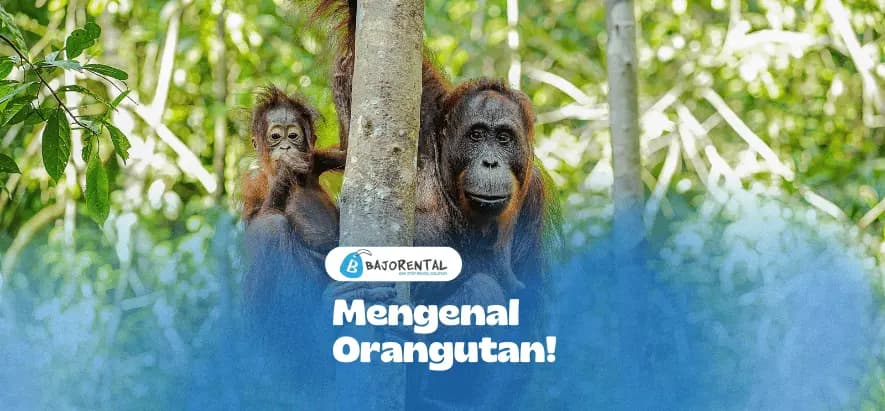
Orangutans are among the smartest primates on Earth — sharing up to 97% of their DNA with humans. Found only on the islands of Borneo (Kalimantan) and Sumatra, these red-furred great apes can use tools, solve complex problems, build nests, and even express emotions. If you've only ever seen an orangutan at a zoo, you're missing the full picture. Seeing them in the wild is one of Indonesia's most extraordinary wildlife experiences — rare, humbling, and completely unforgettable.
Meet the Orangutan: The Genius of the Tropical Forest
Orangutans are not monkeys — they are great apes, and one of our closest relatives in the animal kingdom. Their nickname, manusia hutan (forest people), says it all. Beyond their striking reddish-brown fur and impressive size, what truly sets orangutans apart is their remarkable intelligence.
Every night in the wild, orangutans build a brand new sleeping nest high in the treetops — weaving branches together with precision. It's a small act that reveals something big: creativity, planning, and an extraordinary instinct for survival.

These incredible primates are endemic to Indonesia — meaning you won't find wild orangutans anywhere else on the planet. Only Kalimantan and Sumatra are home to wild populations, making a sighting in either location a truly special privilege for any traveler.
What Makes Orangutans So Unique and Intelligent?
Before we get into where you can see them, here's why orangutans deserve a spot on every wildlife lover's bucket list:
-
DNA That's 97% Human
Orangutans are not classified as monkeys — they're great apes, and the genetic similarity to humans is staggering. At 97% DNA overlap, it's no surprise that orangutans can recognize emotions, follow simple instructions, understand cause and effect, and even use basic tools. This shared biology is precisely what makes them so fascinating to observe up close.
-
An Exceptional Long-Term Memory
In the wild, survival depends on memory — and orangutans have plenty of it. They can map out vast territories, remember where fruiting trees are located across different seasons, and recall reliable water sources. This mental mapping ability is a key part of how they thrive in complex rainforest environments.
-
Natural Tool Users
Orangutans are resourceful problem-solvers. They've been observed using sticks to extract insects or reach fruit, and large leaves as makeshift umbrellas during rain. These aren't learned tricks — they're wild behaviors that demonstrate genuine understanding of how objects work. Pretty incredible for a forest dweller!
Where Can You See Orangutans in Indonesia?
If you're an adventure traveler drawn to authentic wildlife experiences, these are the top destinations in Indonesia for seeing orangutans in their natural habitat:
-
Tanjung Puting National Park, Central Kalimantan
This is arguably the most famous destination for wild orangutan encounters in Indonesia. Here, you can cruise along the Sekonyer River on a klotok (traditional wooden riverboat) and watch orangutans swinging freely through the canopy above. It's not just a visual treat — you'll also learn directly about ongoing conservation efforts that protect these incredible animals. A truly immersive experience.
-
Gunung Leuser National Park, North Sumatra
One of the oldest rainforests on the planet, Gunung Leuser is home to the critically endangered Sumatran orangutan — an even rarer subspecies. Trekking through Bukit Lawang, on the edge of the park, gives you a real chance of encountering orangutans along their natural jungle trails. The forest feels ancient and alive, like stepping into the very heart of the Earth.
-
Sebangau National Park, Central Kalimantan
For a quieter, more intimate experience away from the crowds, Sebangau is an excellent choice. This peat swamp forest offers a slower-paced adventure — you'll explore dense jungle, listen to the symphony of birds and insects, and if you're lucky, spot orangutans moving freely through the trees in the distance. It's the kind of place that reminds you how precious untouched nature really is.
How to Visit Responsibly
Seeing orangutans in the wild is a privilege — and one that comes with responsibility. Here are a few essential tips for ethical wildlife tourism:
- Always book with a licensed tour operator that actively supports conservation programs.
- Never feed or touch wild orangutans — it disrupts their natural behavior and can transmit disease.
- Follow all instructions from your local guide at all times.
- Keep noise levels low and maintain a respectful distance.
Orangutan conservation isn't just the work of scientists and activists. As a traveler, every responsible choice you make — from the tour operator you choose to how you behave in the forest — contributes to protecting these animals for future generations.
By traveling wisely, you become more than just a visitor. You become a guardian of Indonesia's most extraordinary natural heritage.